Informative
How to measure team productivity without micromanaging
If you have to watch the work to know it is happening, you are measuring the wrong thing. Count two or three outcomes per role, and use hours only for context.
Zinwe team · · 2 min read
If you need to watch the work to know it's happening, you're measuring the wrong thing. Hovering, asking for screenshots of progress and checking who replied fastest all feel like control. They mostly tell you who is good at looking busy.
Short answer: good team productivity measurement counts outcomes, not activity. Pick two or three results per role, agree them with the person, and review them weekly. Work hours and app time are useful context for a conversation. They are never the score.
What should team productivity measurement count?
Results that a customer, or the next person in the chain, would notice. Keep it to two or three per role, so everyone remembers them without a dashboard.
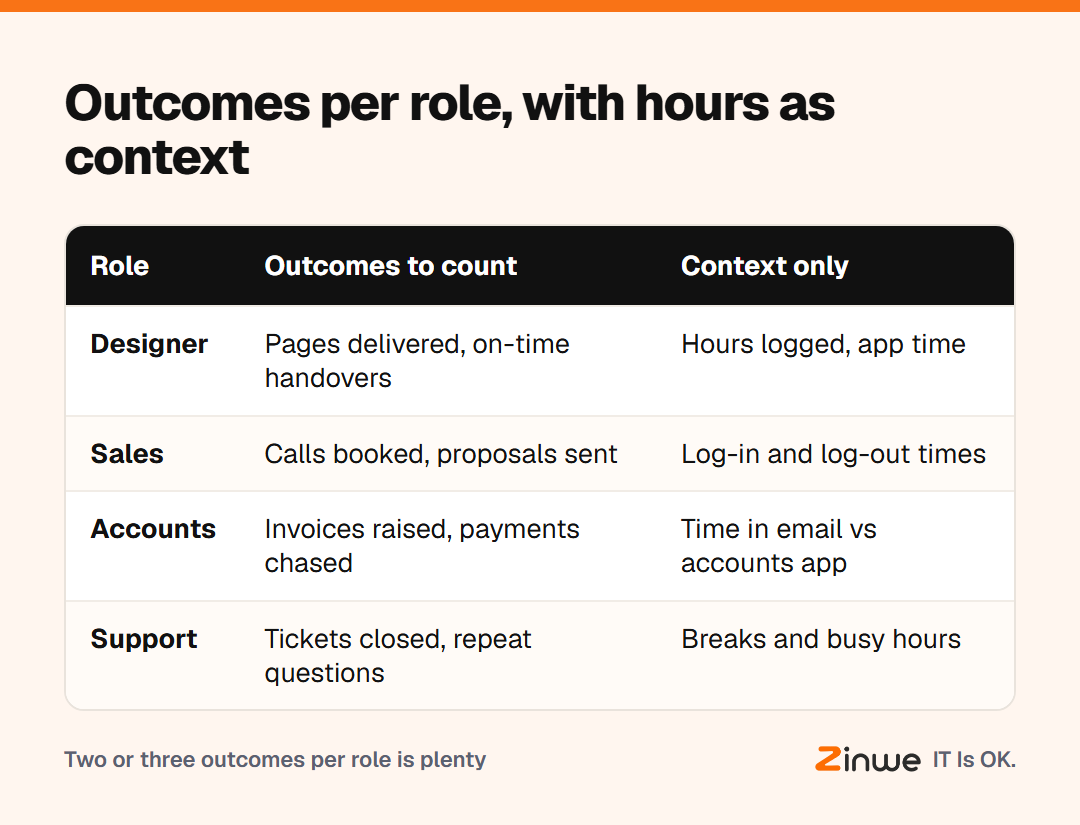
These are your team KPIs, in plain words. If a number doesn't change a decision, drop it.
Where do work hours fit in?
As context, not judgement. Log-in times, breaks and app use answer "what was the day like?", which helps when an outcome slips.
- A designer missing deadlines while logging long days may be overloaded.
- A salesperson hitting targets with short days is doing fine. Leave them alone.
- An accounts clerk spending hours in email, not the accounts app, may be chasing approvals.
Each of these starts a conversation. None of them is a verdict.
How do you avoid micromanaging?
- Agree outcomes together. People commit to targets they helped set.
- Review weekly, not hourly. A 15-minute one-to-one beats ten check-in messages.
- Ask about blockers first. "What's in your way?" before "why is this late?"
- Leave the method to them. Outcome-based management means you judge the result, not the route.
Picture a 12-person web design shop in Kolkata. The founder used to judge people by how quickly they replied in chat. She switched to three outcomes per designer: pages delivered, revision rounds per page and on-time handovers. Within a month, the quiet designer she'd worried about turned out to be the most reliable. The fastest replier had the most revision rounds.
In short
- Count two or three outcomes per role, agreed together
- Use hours and app time only as context
- Review weekly and ask about blockers first
Zinwe shows each person's day: log-in, breaks, apps and sites by name. It doesn't score anyone. The outcomes are yours to set. See how to track work hours openly, or read where your team's time goes.